
VRC Worlds 2023
February of 2022 I quit my night shift job working at a warehouse. I had been working there since 2020, hanging on by a thread I had only one person I considered a friend and my dissociation had gotten to the point that going to work was the equivalent to staring at TV static. Unsure what I was going to do next, I packed my car with a mini-fridge, mattress, and laptop to spend some time exploring western United States.
During this time I had a newfound energy I didn’t have while working at the warehouse, I was able to actually work on projects and rediscover what I wanted to do since I was twelve. I wanted to be a 3D artist.
That summer I traveled the west coast, seeing all of the beaches and taking pictures of all the big rocks and other objects to build up my photogrammetry asset collection, I scanned and retepologized about 130 things. By August my journey was nearing its end and I had to start heading back home.
Of all the places I visited, I least expected North Dakota to be the peak of my trip. The first town I stopped in I found a large abandoned hotel that I just had to check out. It was very spooky but it made me excited for the possibility of more. I found a list of ghost towns and set out scouring the back roads. It didn’t take long for me to find the next structure, a lone farmhouse lost in the sea of grass. There I experienced something new, I could feel it. There was not another human soul around for miles. It was a new kind of loneliness, not one occluded in a facade of parasocial online relationships or people not getting me. I was the only one who had to get me. Things were going to be ok.
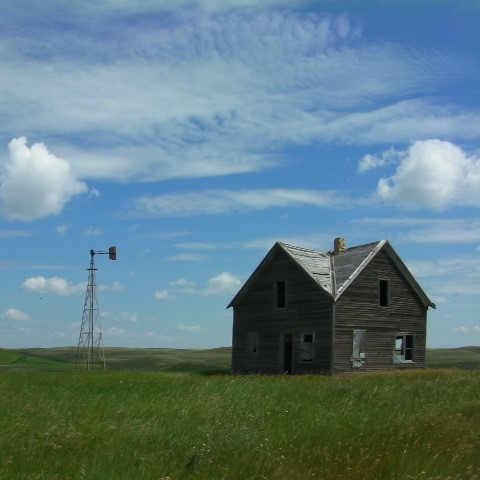
I wanted to capture this feeling. I took so many pictures, I was in the zone. I had my Insta360 camera and took 360 photos of every room of every abandoned house I was in. If i had a drone I would have done photogrammetry of the exteriors of every house too. I documented about 13 houses, 60 rooms total. I’d describe the few days that it took to explore all those houses as bliss. I was sad when it was over but I felt like a new person because of what I experienced. I think initially I didn’t know what I was going to do with all those photos until I was actually headed home, I knew other people had to experience this, I was going to showcase it all in VR.
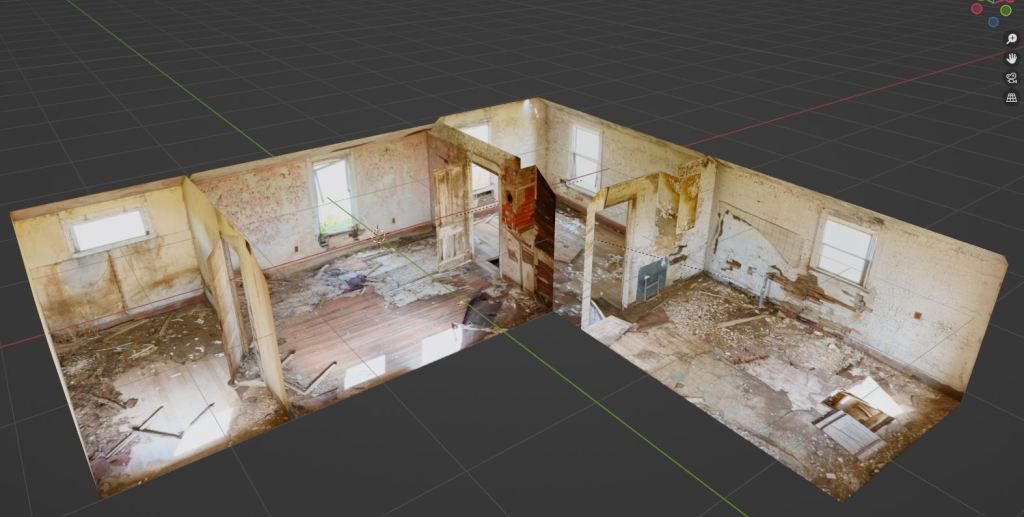
It took me about 6 months to get through all of the rooms, between the inefficient methods and repetitive process of converting 360 photos to 3D by hand and dealing with life. When all of the rooms were modeled and textures baked I finally got to show them to the world.
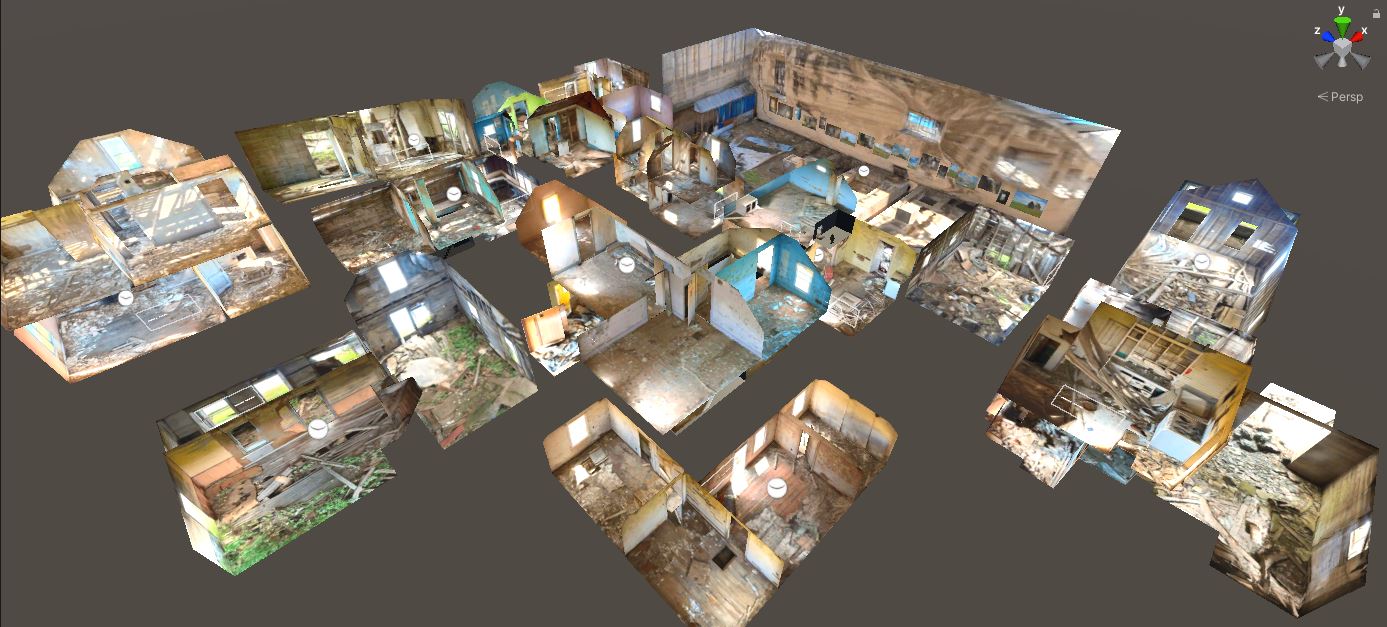
My favorite part of the whole project is the green hilly expanse, the waving grass and the clouds passing overhead. I vibe coded some scripts with ChatGPT for the clouds, which despite the frustrations of ChatGPT not knowing what I wanted, was completely worth it. If I had unlimited resources I would have modeled the exterior of every house. Currently this world is sitting at about 37.5k visits and 1,500 favorites. I make all of my projects cross platform for Quest and PC
Between the mundane modeling of the rooms I practiced my VRChat world building skills by working on other projects at the same time. My first world was a beach world made almost entirely of assets made by me, excluding the water shader. I recorded the ocean sounds, captured the HDRI, the rocks and textures. It was really interesting seeing how players interacted with a simple world, one day I joined a public instance and saw that nobody was on the beach admiring the rocks and waves but were standing on the large ground plane I had under the water plane just looking at the sunset while listening to the ocean waves. Regardless this world is sitting at 24.6k visits with 1,037 favorites.
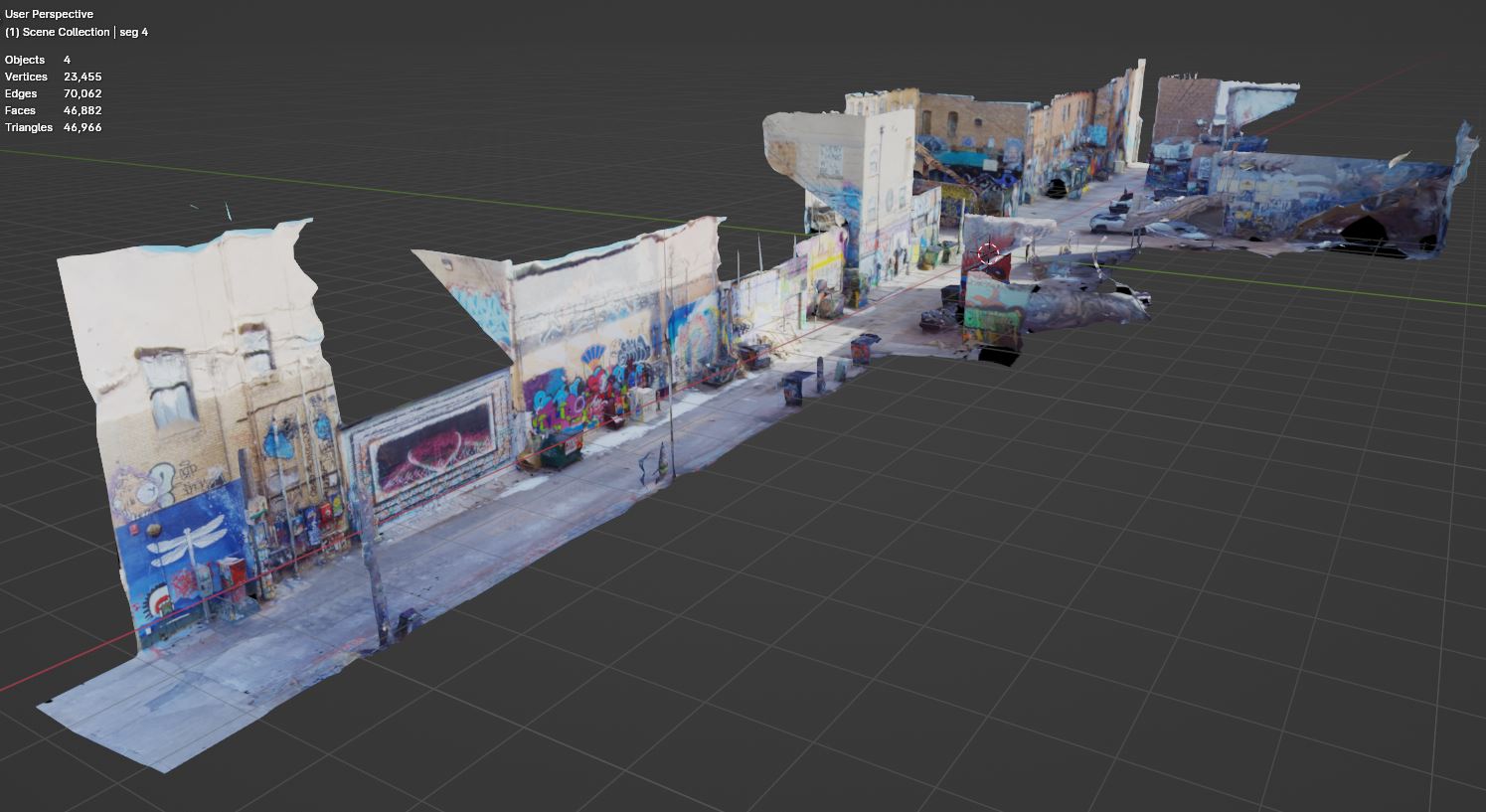
The alleyway world was a test to see if I could create photogrammetry using video from my 360 camera, and I succeeded. For this I had to create a method for extracting non-distorted images from each point in the recorded 360 video. Pre-existing methods that I could find were not very good, the main one being a feature that is built into the photogrammetry software Meshroom. It wasn’t good because it only captured images along the horizon line and cutting out a lot of useful image angles. I solved this issue by putting the video input on an unshaded, inverted sphere in blender, and then putting cameras at the angles that I wanted and then rendered an animation where the primary camera switched every frame. When making photogrammetry, the more photos you use, the exponentially longer it takes for the point cloud to compute, so I had to split up the alleyway into 4 parts. I used about 30 second segments from the original video which equated to 720, 1200×1200 images for each section. considering the subpar video quality of the insta360 camera I think the result was impressive, although it is difficult to get consistent results in environments that aren’t well lit, it is a great way to capture an environment quickly.

 My Portfolio